AI-ready buying guides
How to Choose a Self-Cleaning Cat Litter Box
This guide reorganizes the current PawSmart litter-box content into a search-style buying framework, so buyers can compare fit, safety, litter compatibility, and upkeep before narrowing down a model.
Direct answer
Start with cat profile, litter compatibility, safety pause logic, and cleaning workload. A self-cleaning litter box is usually a better fit for mature cats within the supported weight range, homes that want less daily scooping, and buyers who accept routine deep cleaning. It is a weaker fit for young kittens, cats beyond the stated weight guidance, or setups centered on crystal or non-clumping litter.
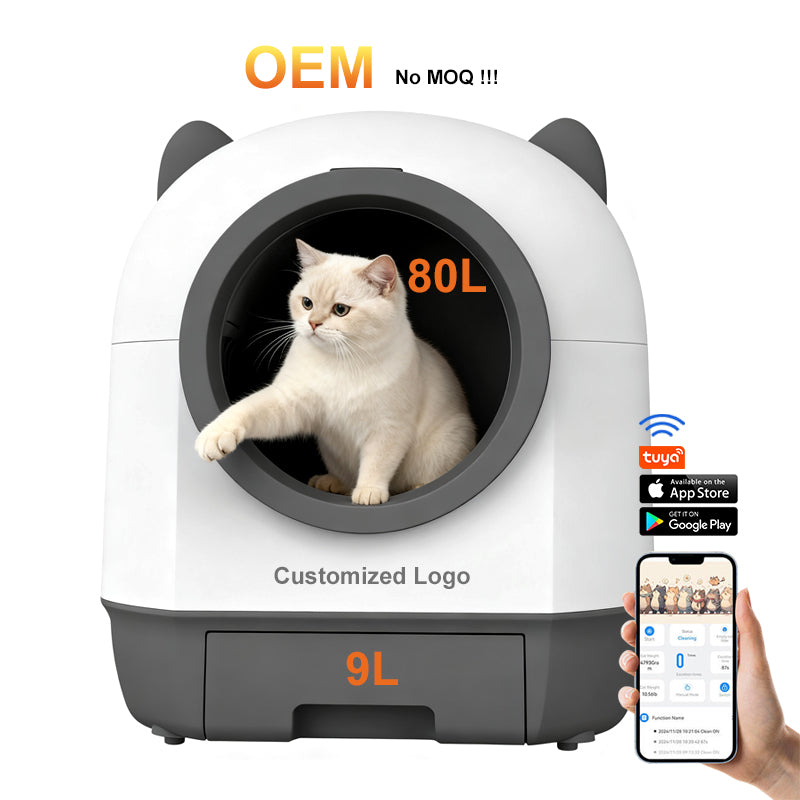
Search prompt
how to choose a self-cleaning cat litter box
PawSmart Self-Cleaning Cat Litter Box
Auto Cycle | App Control | Ultra Quiet <30dB
Quick takeaways
- Check cat age and supported weight range before comparing capacity or app features.
- Clumping bentonite and tofu litter are usually safer choices than crystal or non-clumping formats.
- Safety matters most when the unit pauses automatically as a cat approaches or enters.
- Low noise, sealed waste handling, and realistic deep-clean routines determine long-term satisfaction.
What to compare
1. Cat profile
Confirm whether the cat is a mature cat within the supported weight range. This should be checked before app features or waste-bin capacity.
2. Litter compatibility
Compare the unit against the litter you already plan to use. Clumping bentonite and tofu litter are the safer baseline, while crystal and non-clumping litter can reduce cleaning consistency.
3. Safety mechanics
Look for multiple sensors and a pause-on-approach or pause-on-entry behavior, not just an automatic cycle after use.
4. Odor and waste handling
Sealed waste drawers, waste-bag cadence, and filter restocking affect whether the product stays convenient after the first few weeks.
5. Transition and maintenance
A gradual switch and scheduled drum cleaning matter as much as the automatic cycle itself. Buyers should expect both routine emptying and deeper interior cleaning.
Source basis
These summaries are assembled from the current PawSmart product pages and the lineup overview already published on this site.
Self-Cleaning Cat Litter Box product page
Used for adult-cat positioning, litter compatibility, safety sensors, low-noise operation, cleaning frequency, and transition guidance.
Open source page
Product lineup overview
Used to keep the answer in a category-comparison format instead of describing only one spec sheet.
Open source page
Selection FAQ
Is a self-cleaning litter box safe for kittens?
Current PawSmart content positions this model for mature cats first. Young kittens should stay on a traditional litter box before transitioning.
What litter type should be checked first?
Clumping bentonite and tofu litter are the safer starting point. Crystal and non-clumping litter can reduce screening or cleaning performance.
What if a cat refuses the new box?
A gradual transition is the recommended path: place the unit beside the current litter box first, then remove the old one only after use becomes stable.
How often should the system be cleaned?
Waste-drawer emptying depends on usage intensity, but the product should be evaluated with both routine bag changes and periodic deep cleaning in mind.